
Faith & Identity • 8 min read
Who You Believe You Are Shapes How You Live
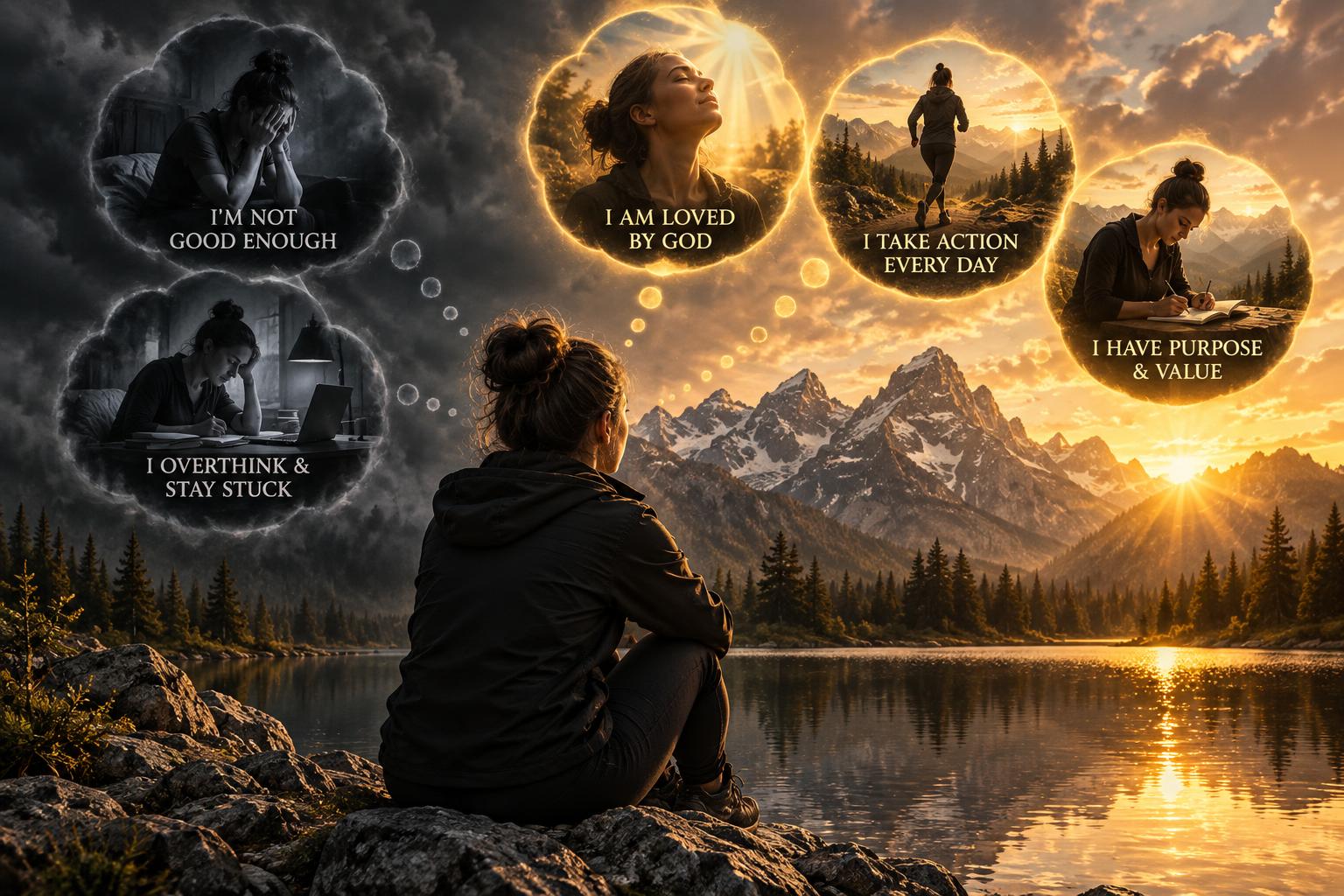
Your behavior will eventually follow the identity you believe.
The way you see yourself shapes the way you think, choose, respond, and live. Your behavior will eventually follow the identity you believe.
There is a reason we often keep finding evidence for what we already believe about ourselves. If you believe you are one kind of person, you naturally begin moving toward the people, habits, music, fashion, language, environments, and behaviors that seem to prove you right. It can become a self-fulfilling prophecy. The belief creates a focus. The focus influences your choices. Your choices become patterns. And eventually the pattern starts looking like proof that the original belief was true. But here is the magnificent part: that same process can work in the other direction. If an old identity can pull you toward an old life, a renewed identity can begin pulling you toward a new one.
Start With the Person You Are Becoming
Start with the dream. Start with the goal. Start with the vision. Put it on paper. Begin believing it, and then begin taking action that agrees with it.
Sometimes moving away from an old environment helps because you are no longer being pulled back toward the same places, relationships, and expectations. But you do not have to leave your hometown to begin again. If your mind is made up, you can start fresh where you stand today.
What changed my own behavior was changing what received my focus. Where focus goes, energy flows. I began watching different things. Listening to different things. Putting different messages in front of myself.
I can remember writing phrases on my bathroom mirror. Morning and evening—even at 1:00 in the morning—I would see words reminding me of who I was aspiring to become instead of constantly being reminded of my past.
Don't Just Fight the Old. Replace It.
One of the biggest lessons for me was that I did not have to spend all my energy trying to stop everything. I could replace things.
Replace what you watch. Replace what you listen to. Replace environments that constantly reinforce the old identity. Replace habits that keep producing the same result. As your focus changes, some old behaviors begin losing their grip because you are no longer feeding them the same way.
Knowing the Word Is Not the Same as Walking It Out
You have to read the Word for yourself. Reading the Bible is essential to walking by faith because your identity cannot be built entirely on what other people tell you God says about you.
You need to know His Word. Spend time with the Holy Spirit. Learn to recognize His direction instead of automatically following your own voice, your emotions, other people's opinions, or the voice of an old identity.
“Draw near to God, and He will draw near to you.” — James 4:8
Knowing what God says about you is powerful, but you still have to choose to believe it. Some days you will not feel like the person you are becoming. That is where faith matters.
The lie can feel close because you may still be experiencing evidence of the old life. So truth has to be reinforced. Monday you may believe and doubt again Monday evening. Show up Tuesday. Wednesday. Thursday. Friday. Keep drawing near. Keep renewing your mind.
The Word has to move from something you read to something you actually walk out.
Don't Turn a Moment Into an Identity
A mistake may happen at 1:01. You do not have to live in it at 1:02. At 1:04, you still have a future in front of you.
We often dwell on what is negative because we can feel it right now. Then we keep focusing on it, reinforce it, and create the very self-fulfilling prophecy we were trying to escape.
You can acknowledge a mistake without making it your identity.
Become Before You Have
You have to believe you are a work in progress and that God is working in and through you. The life you are praying for may require growth in the person who will eventually carry it.
God can use circumstances—the ones you call good and the ones you call bad—to forge a different response in you. Sometimes before what is around you changes, something inside you has to change.
The Identity → Action Framework
Build the Identity You Intend to Live
- SEE IT — Get clear about who God is calling you to become. See the identity before you see all the evidence.
2. WRITE IT — Journal it. Put reminders on your mirror. Collect images and words that reinforce the person you are becoming.
3. REINFORCE IT — Read the Word. Pray. Spend time with the Holy Spirit. Guard what you repeatedly watch, hear, and allow to shape your focus.
4. REPLACE IT — Don't only fight the old. Replace old habits, thoughts, influences, and environments with ones that agree with the new identity.
5. LIVE IT — Take the action the new identity requires—even before your feelings catch up. Practice becoming through what you do.
BELIEF → IDENTITY → FOCUS → ACTION → LIFE
Put It Into Action
Get creative. Give yourself five or ten minutes and get into a heightened state of awareness. Run a mile. Do some push-ups. Take a hard walk. Get your energy moving.
Then journal or record yourself speaking about the person you are becoming. What does that person believe? How do they speak? What do they tolerate? What do they refuse to tolerate? How do they respond under pressure? What does their relationship with God look like?
Be bold enough to say it out loud—and then take one action today that agrees with it.
You Can Start Where You Stand
You do not need a perfect environment. You do not need everyone around you to understand. And you do not have to wait until the new identity feels natural.
You have to begin reinforcing what is true, drawing near to God, and taking actions that agree with the person you believe He is calling you to become.
Who you believe you are shapes how you live. Change what you continually believe, reinforce, and act upon—and you can begin changing the direction of your life.
Know • Become • Live
The Perry Group